The climate
300 days of sun a year!!!
The geographic position of the island and its insularity favour the climate in Sardinia. In fact being situated closed to the Tropic of Cancer; the island enjoys a maritime climate, which is a temperate climate, mitigated by the presence of the sea. The effects of this climate are especially felt along the coastline while on the higher ground and the mountains the altitude lowers the temperature.
.jpg) The annual temperature is around 14° - 20°, the coldest month being January, while the hottest is August in the coastal areas and July in the central zones of the island.
The annual temperature is around 14° - 20°, the coldest month being January, while the hottest is August in the coastal areas and July in the central zones of the island.
During summer, the temperature goes around 30° degrees rising to 40° degrees in certain areas. It is during the warmest period of the year that the island is visited by the highest number of tourists, particularly around August Bank Holiday. However, the months of September and October are pleasantly warm as well although not as hot as during August and the number of visitors is not as great.
During spring, the temperature is around 14°, ideal for excursions given that it is not comfortably warm.
In winter, the temperature rarely drops below 8°, always taking into consideration the medium temperature can vary throughout the island. However, in the central areas of the island the temperature can reach below freezing point because of the altitude of the terrain. In Gennargentu's mountains and the surrounding areas such as Bruncu Spina and Punta la Marmora snow is common in the coldest periods, in fact at Fonni there is the island’s only ski resort.
With regards to rainfall, the wettest seasons are autumn and spring. During the year, it does not rain a great deal but when it does, it is usually in the form of rainstorms, which tend to cause damage to the crops.
The driest months are generally July and August, while the wettest months are November and December.
June is also a dry month with a clear and blue skies.
The winds in Sardinia
T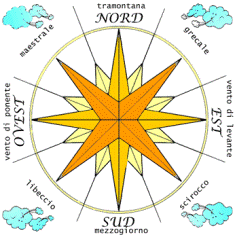 he island is constantly exposed to the winds, especially from the northwest. The zone which is the least affected by the winds is the east coast of the island, which is rather more sheltered.
Southwester – the wind that blows across the island most frequently, particularly in winter.
Sirocco – from the southeast, a hot and dry wind that blows from the desert regions of Africa.
Levant – from the east – blows along the eastern coastline bringing fresh, damp air.
North wind – always quite fresh.
Northeaster – brings fresh air both in summer and in winter.
Westerly – blows frequently during winter.
Cold-air currents are rare in Sardinia but the breezes influence the coastal areas.
| Month | ° C daily (medium) | °C daily (Max) | °C night | °C sea |
Sun Hours |
Rain days |
| Jan. |
14 |
20 |
7 |
14 |
5 |
7 |
| Feb. |
15 |
23 |
7 |
13 |
5 |
7 |
| Mar. |
17 |
26 |
9 |
14 |
6 |
6 |
| Apr. |
20 |
28 |
10 |
15 |
7 |
5 |
| May |
23 |
35 |
14 |
17 |
9 |
5 |
| Jun. |
28 |
34 |
18 |
20 |
9 |
2 |
| Jul. |
31 |
40 |
20 |
23 |
11 |
1 |
| Aug. |
31 |
40 |
20 |
24 |
10 |
1 |
| Sep. |
28 |
39 |
19 |
23 |
8 |
3 |
| Oct. |
24 |
33 |
15 |
21 |
7 |
6 |
| Nov. |
19 |
29 |
12 |
18 |
5 |
7 |
| Dec. |
15 |
24 |
8 |
15 |
4 |
8 |


